About All Tours Half Day ToursFrom Ho Chi Minh City ToursPrivate ToursFull Day ToursMekong Delta Combo ToursCar ToursFamily Tours Directions Hours & Fees
Find Tours 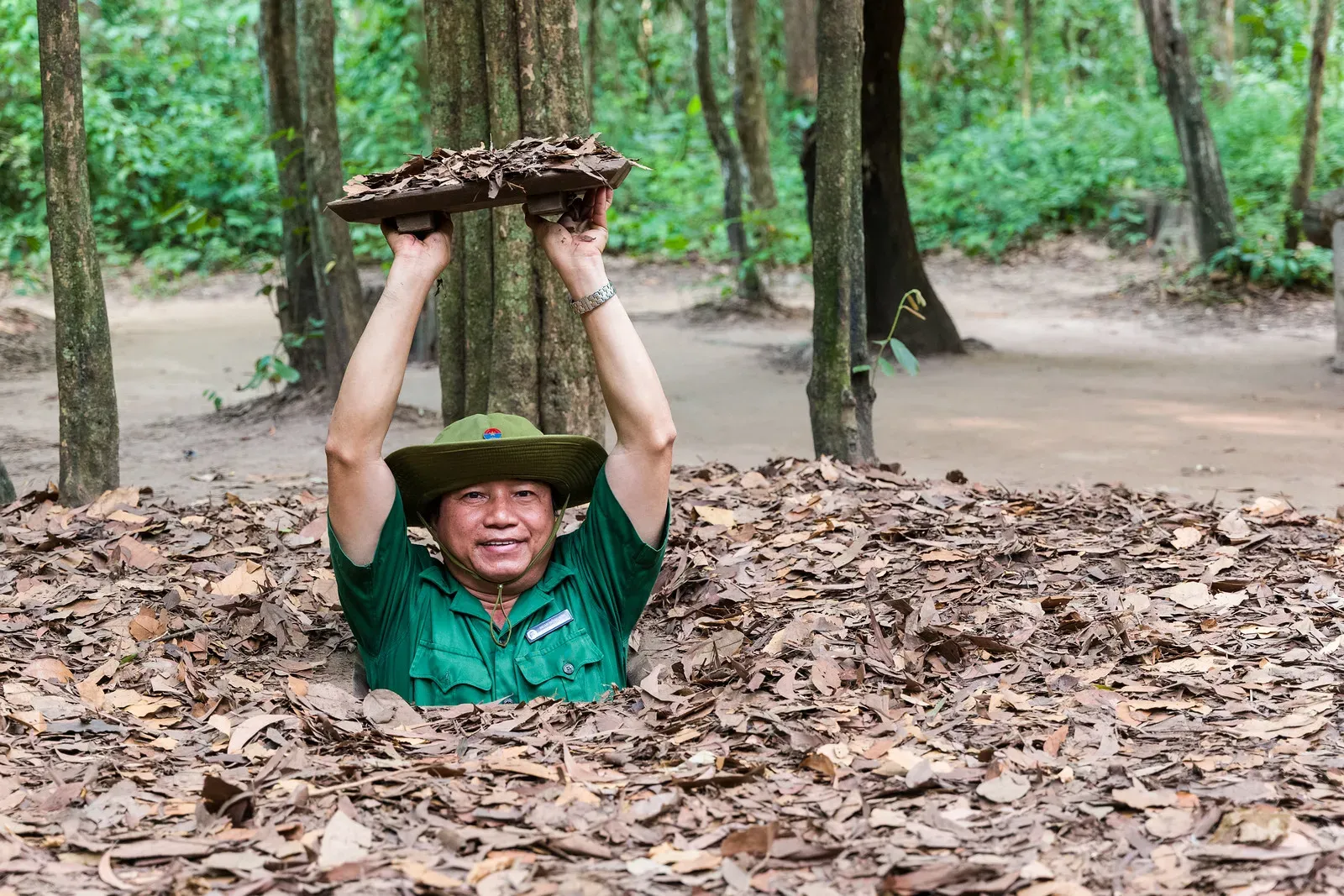
The Cu Chi Tunnels form a 250-kilometer subterranean network beneath Ho Chi Minh City. Viet Cong soldiers lived, fought, and built hospitals up to 12 meters underground during the Vietnam War.
Two hundred and fifty kilometers of hand-dug passageways snake beneath the laterite clay of Ho Chi Minh City's Cu Chi District. Viet Cong forces engineered this three-level subterranean city to survive heavy aerial bombardment and launch surprise attacks against American and South Vietnamese troops. The network contained everything required to sustain a guerrilla army. Soldiers slept in cramped quarters, doctors performed surgeries in underground hospitals, and commanders mapped out the 1968 Tet Offensive in hidden meeting rooms. Today, the site operates as a massive open-air war museum split across two distinct locations.
Visitors navigate a sanitized but still punishing fraction of the original system. The Ben Dinh site caters to large tour groups with widened passages reinforced by concrete. Ben Duoc sits 20 kilometers further out, offering a larger, less crowded 121-kilometer preserved section where the tunnels retain their original, claustrophobic dimensions. Red clay dust coats everything. Temperatures inside hover near 30 degrees Celsius, compounded by high humidity and stagnant air. Sweat soaks through clothing within minutes of descending the narrow staircases into the dark.
Above ground, the jungle floor hides trapdoors camouflaged with dead leaves and soil. Guides dressed in traditional black Viet Cong pajamas and checkered scarves lead groups through the forest. They wear sandals crafted from recycled car tires, demonstrating how the original fighters moved silently through the brush. Guides demonstrate the mechanics of bamboo punji stakes and iron swinging-door traps designed to maim enemy infantry. The constant crack of gunfire echoes from the nearby National Defense Sport Shooting Range, where tourists pay 60,000 VND per bullet to fire war-era weapons. The noise penetrates the forest canopy, providing a stark audio backdrop to the tour. Tourists finish the circuit by eating boiled tapioca dipped in crushed peanuts and sugar—the standard daily ration for soldiers living in the dark.
Getting to the site requires navigating heavy traffic leaving District 1. The 70-kilometer drive takes up to two hours by private car or bus. Wealthier tourists bypass the congested roads entirely by booking a 1.5-hour speedboat transit up the Saigon River from Tan Cang Pier. Heavy monsoon rains from May to October turn the dirt paths into slick mud, often flooding the lowest tunnel levels and forcing sudden closures. Check the weather forecast before departing your hotel.
Viet Minh soldiers broke ground on the first tunnels in 1948. Armed with simple hoes and bamboo baskets, local fighters dug short, isolated shelters to hide from French colonial sweeps. These early trenches connected individual village basements. They provided temporary refuge rather than a sustained living environment. Digging occurred strictly at night to avoid detection, with the excavated clay secretly dumped into the Saigon River or scattered across active rice paddies. A team of four men could excavate barely two meters of tunnel per day through the dense earth.
The early 1960s brought American forces and a massive escalation in aerial bombing. Communist forces responded by linking the fragmented village shelters into a contiguous 250-kilometer web stretching from the Cambodian border to the edge of Saigon. Engineers designed three distinct depths. The first level sat three meters down, strong enough to withstand standard artillery shells. The second level dropped to six meters. The final level plunged 12 meters deep, acting as a bomb shelter against B-52 carpet bombing. This deepest level housed the water wells and the most critical command infrastructure.
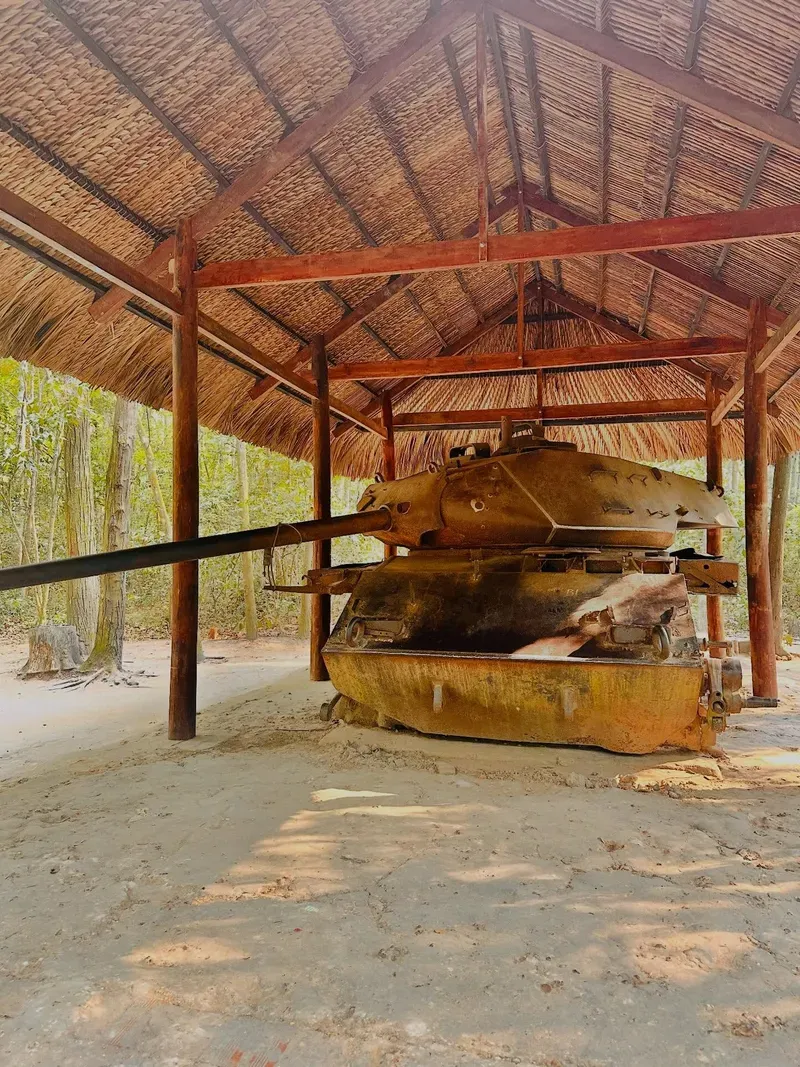
Life underground demanded extreme adaptation. Sickness claimed more lives than combat. Malaria, intestinal parasites, and severe vitamin deficiencies plagued the 45,000 people living in the dark. Soldiers shared their cramped quarters with venomous centipedes, scorpions, and bats. To cook without drawing airstrikes, inventors created the Hoang Cam stove. This system of subterranean vents diffused cooking smoke across dozens of meters, releasing it as a faint mist that blended with the morning jungle fog. In 1967, American forces launched Operation Cedar Falls, sending 30,000 troops to destroy the network. They utilized bulldozers and chemical defoliants, but the subterranean structure largely survived the assault.
The network proved its strategic value during the 1968 Tet Offensive. Thousands of troops staged inside the tunnels before emerging simultaneously to attack the US Embassy and Tan Son Nhut Air Base in downtown Saigon. Following the war's conclusion in 1975, the government preserved sections of the tunnels as a monument to the resistance.
The Vietnamese government designated the site a Special National Monument in 2016. Only 121 kilometers survive today. Bomb craters still pockmark the surrounding forest, though secondary jungle growth has reclaimed the scorched earth. The Ben Duoc Memorial Temple now stands above the deepest sections, housing stone tablets engraved with the names of 44,000 fallen soldiers. Visitors accessing the deeper Ben Duoc tunnels often encounter bats roosting in the unlit sections. Bring a reliable flashlight to navigate the uneven clay floors, as phone lights barely pierce the gloom.
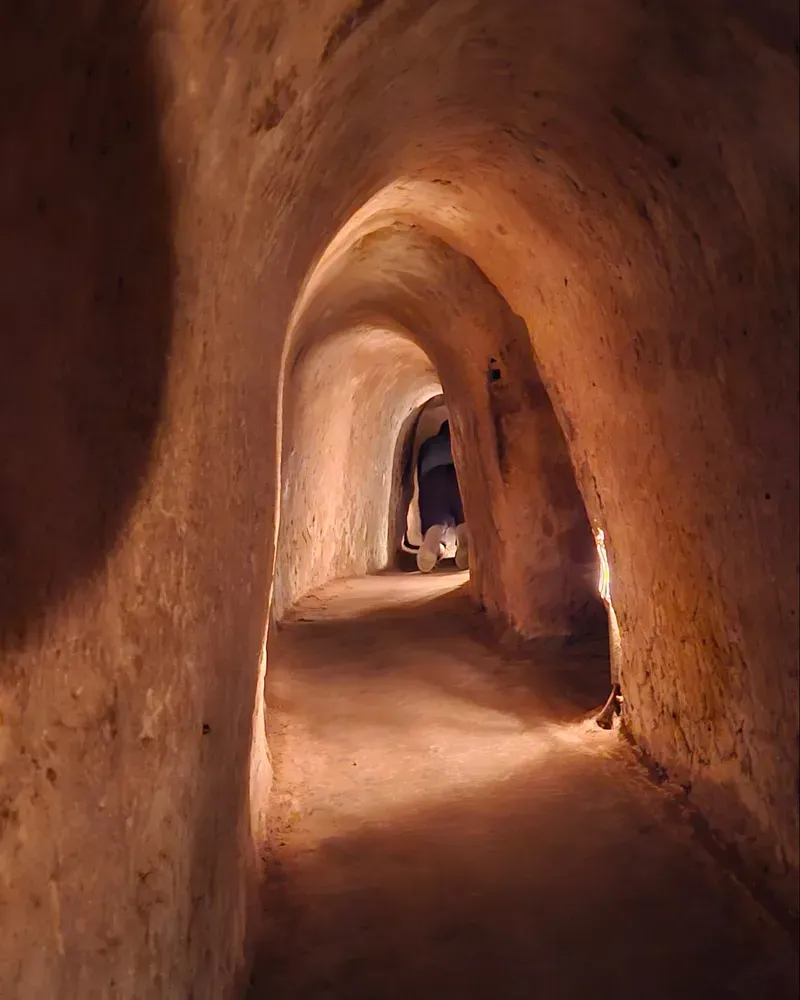
Hard laterite clay dictates the entire structure of the Cu Chi network. This specific soil type hardens like concrete when exposed to air, preventing cave-ins even under the weight of heavy tanks or repeated artillery strikes. Builders carved the passages just wide enough for a single person of slight build to crawl through. Standard tunnels measure barely 80 centimeters high and 60 centimeters wide. U-shaped water traps block key intersections, preventing toxic gas from spreading and stopping floodwaters from drowning the lower levels. These flooded dips required soldiers to hold their breath and swim blindly under the clay to reach the next dry chamber.
Air circulation relies on a massive array of disguised ventilation shafts. Engineers carved these breathing holes to resemble termite mounds or hid them inside the hollowed-out trunks of rubber trees. American tunnel rats—infantrymen sent down to clear the passages—faced a gauntlet of lethal deterrents. Trapdoors dropped intruders into pits lined with feces-coated bamboo punji stakes. Tripwires triggered swinging iron doors fitted with foot-long spikes. False corridors led to dead ends rigged with unexploded American ordnance repurposed as landmines. The tiger trap featured a pivoting floor that dropped victims onto metal spikes before snapping shut above them.
The layout prioritizes compartmentalization. Heavy wooden doors separate different zones, allowing defenders to seal off compromised sections instantly. Secret exits open directly into the Saigon River, providing an emergency escape route when ground forces overran the surface. Subterranean hospitals featured operating tables carved directly from the earth, where surgeons worked by the light of scavenged bicycle-powered generators. Command rooms contained large wooden tables covered in hand-drawn maps, illuminated by flickering oil lamps. The walls of these meeting rooms still show the pickaxe marks left by the original excavators. The Ben Dinh tourist section features widened, concrete-reinforced passages to accommodate modern visitors, but the original dimensions remain intact at the Ben Duoc site. Claustrophobic individuals should stay above ground, as exits in the crawlable sections only appear every 10 to 20 meters.
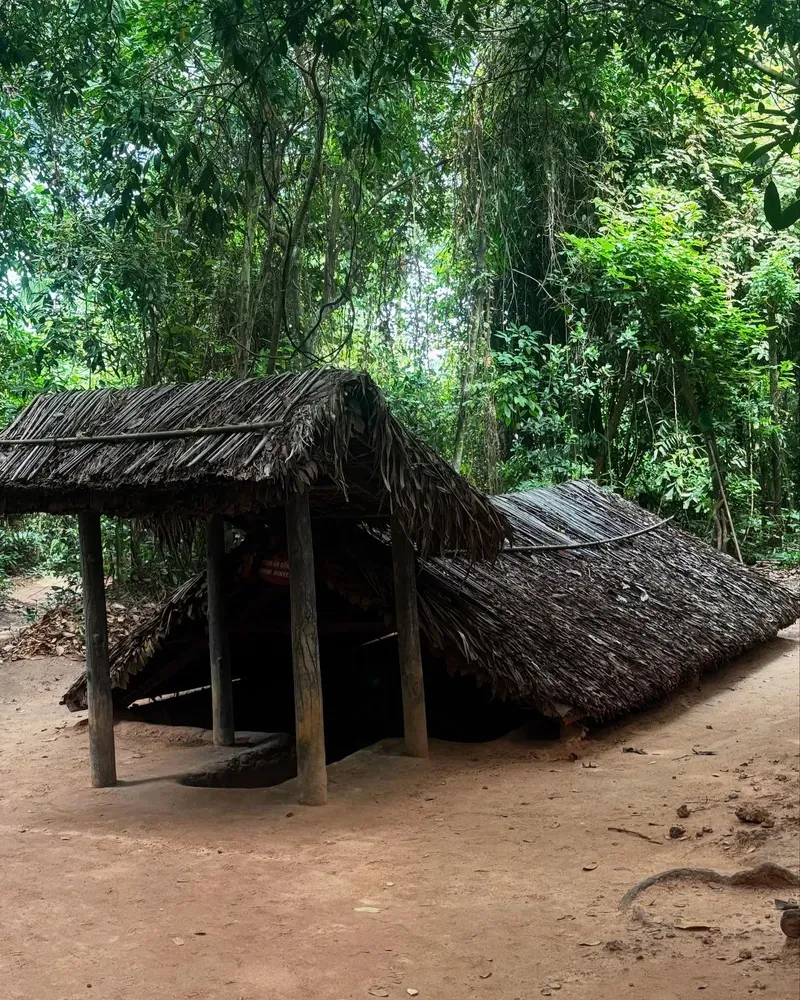
Cu Chi represents the ultimate symbol of Vietnamese endurance against technologically superior forces. The tunnels shifted the psychological balance of the war. American troops controlled the daylight and the air, but the Viet Cong owned the night and the earth. This duality features heavily in modern Vietnamese education, where the Cu Chi fighters are studied as masters of asymmetric warfare and resourcefulness. The ability to survive decades of bombing using hand-dug trenches forms a core pillar of the national identity taught in schools across the country.
The site functions as an active war memorial rather than just a historical curiosity. Domestic tourists visit the Ben Duoc temple year-round to burn incense and leave offerings of fruit and fake currency for the 44,000 dead. Veterans from both sides of the conflict return to walk the jungle paths, often sharing conflicting narratives of the battles fought above the clay. Propaganda films from 1967 play on loop in the underground theaters, presenting the conflict entirely through the lens of national liberation. The black-and-white footage shows female guerrillas receiving medals for shooting down aircraft with standard infantry rifles.
Local agriculture still bears the scars of the conflict. Farmers in the surrounding Cu Chi District regularly unearth shrapnel, bullet casings, and unexploded ordnance while plowing their fields. The landscape has slowly transitioned from a defoliated war zone back to a productive agricultural hub. Many organized tours combine the tunnels with a visit to the Cao Dai Holy See in Tay Ninh, a 1.5-hour drive away. This proximity links the brutal history of the war with the surreal, colorful architecture of Vietnam's most distinct syncretic religion. Visitors taking the public Bus #13 from Ben Thanh Station will pass miles of rehabilitated rubber plantations and rice paddies. Stop at the nearby Cu Chi Wildlife Rescue Station to see pangolins and macaques recovering from the illegal wildlife trade before heading back to the city.
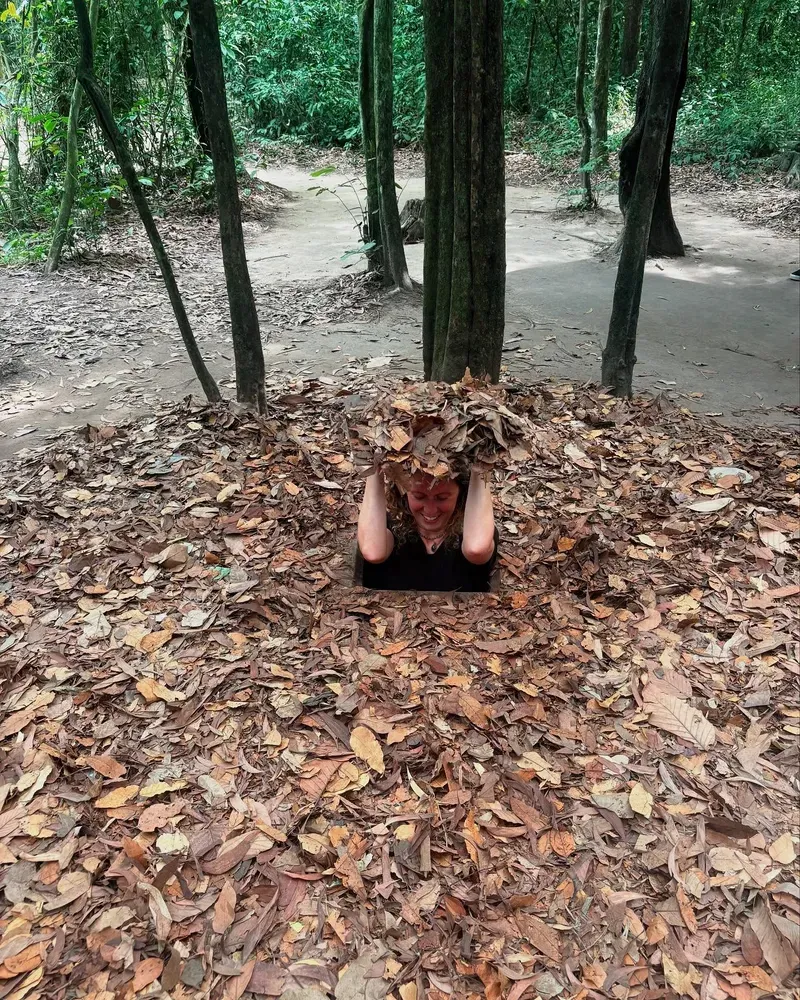
Bats actively roost in the deeper, unlit sections of the Ben Duoc tunnels today.
The Hoang Cam stove diffused cooking smoke through long underground vents to prevent aerial detection.
The laterite clay permanently stains light-colored clothing, prompting guides to recommend wearing old, dark outfits.
Doctors delivered babies in the subterranean hospitals while B-52 bombers dropped payloads on the surface.
Viet Cong fighters scavenged unexploded American bombs to manufacture their own landmines and tripwire traps.
Soldiers survived primarily on boiled tapioca root dipped in a mixture of crushed peanuts, salt, and sugar.
U-shaped flooded corridors prevented toxic gas from spreading through the network during chemical attacks.
Ben Dinh sits 50 kilometers from the city center and features widened tunnels for large tour groups. Ben Duoc is 20 kilometers further away, five times larger, and retains the original, narrow tunnel dimensions.
Bullets cost 60,000 VND each. The range requires a minimum purchase of 10 bullets per weapon, bringing the base cost to 600,000 VND.
No. The passages are extremely narrow, dark, and hot. Claustrophobic visitors should skip the crawling sections and view the above-ground trap demonstrations and exhibits instead.
You can travel there independently via Grab or public bus. However, the entrance fee includes a mandatory official park guide who must accompany you through the site.
December to March offers dry paths and cooler temperatures. Heavy monsoon rains from May to October turn the dirt trails into mud and frequently flood the lower tunnel levels.
Tourists can choose to crawl distances ranging from 20 to 100 meters. Emergency exits are built into the route every 10 to 20 meters.
Wheelchair access is highly restricted. The ticketing area has ramps, but the main site consists of uneven dirt paths, and the tunnels themselves are entirely inaccessible.
Wear comfortable, modest clothing that you do not mind ruining. The red clay soil stains fabric permanently, and closed-toe shoes are necessary for walking through the jungle.
Drones are strictly prohibited without a prior military permit. The area remains under the jurisdiction of the Ministry of Defense.
Take Bus #13 from Ben Thanh Station to the Cu Chi Bus Station. From there, transfer to Bus #79 to reach Ben Duoc or Bus #63 for Ben Dinh. The total trip takes roughly 2.5 hours.
Browse verified tours with free cancellation and instant confirmation.
Find Tours